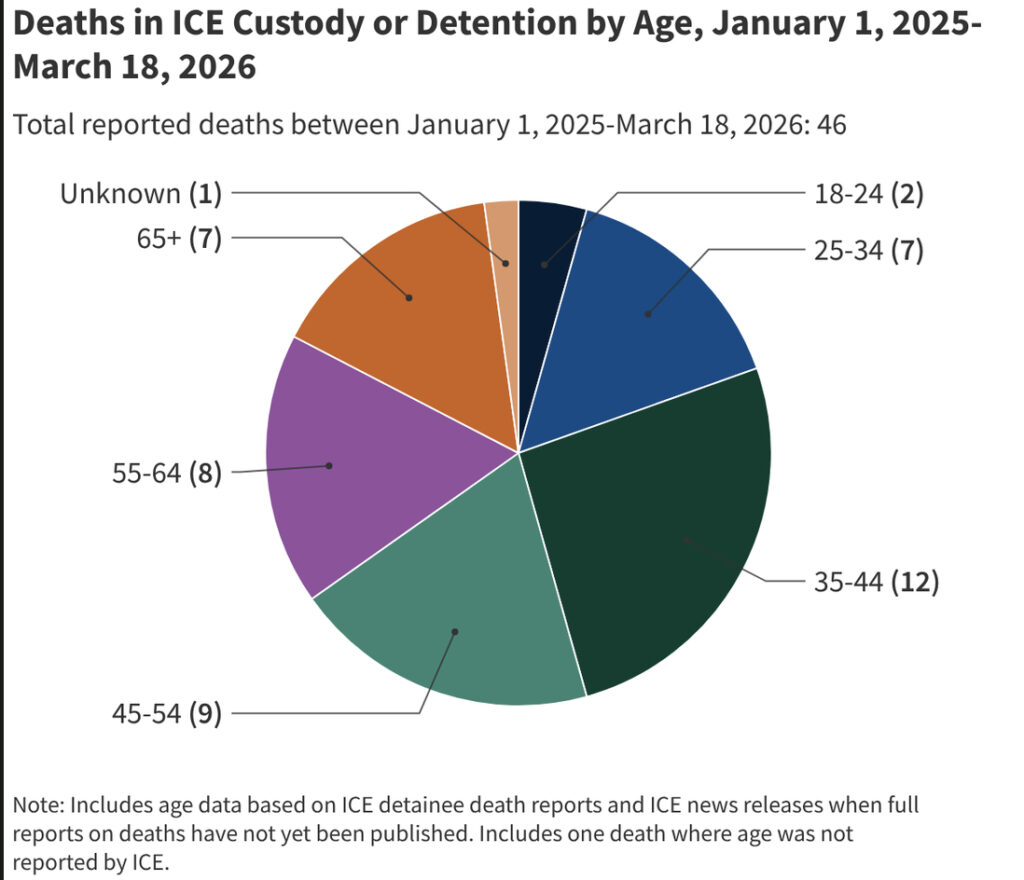
This year, at least 52 people have died while in the custody of U.S. Immigration and Customs Enforcement (ICE), according to a report by Human Rights Watch and Physicians for Human Rights. This number includes 39 deaths during the first year of the current administration (January 20, 2025–January 19, 2026), marking the highest annual total since ICE was established in 2003. By mid-July 2026, advocacy groups reported at least 22 more deaths in 2026, suggesting this year could match or exceed the previous year’s record of 33 deaths, which is a significant increase from 11 deaths in 2024.
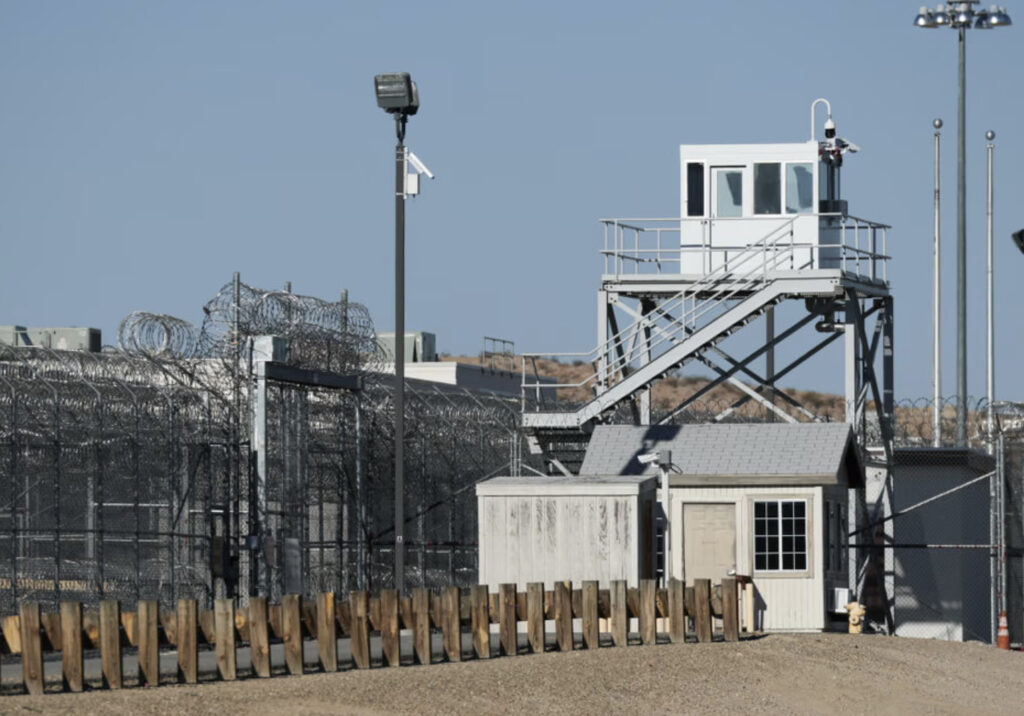
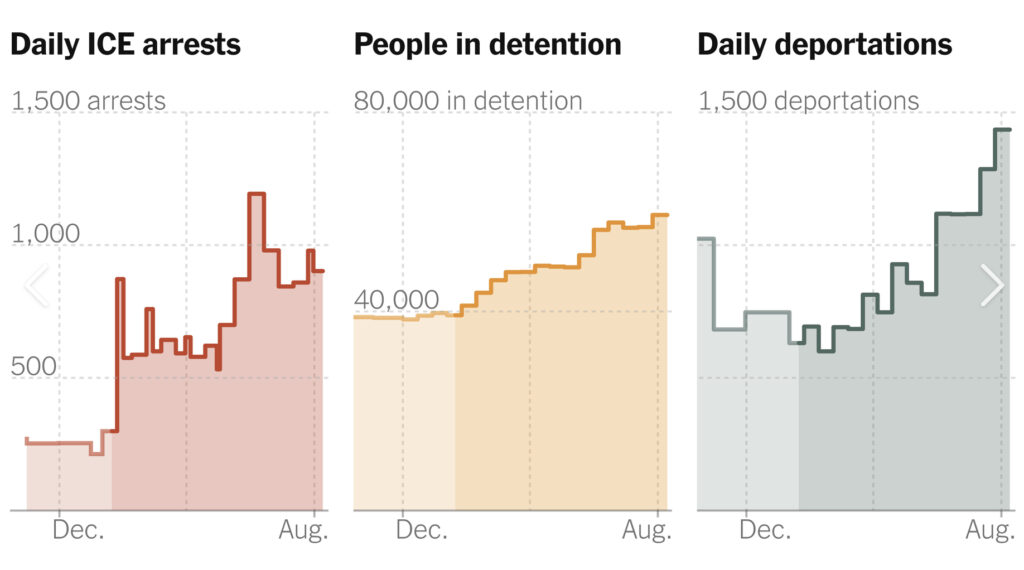
Detention populations surged more than 70 percent, reaching over 68,000–71,000 people at peaks in early 2026, driven by expanded interior enforcement and policy changes that increased mandatory detention. Independent analyses found the mortality rate more than doubled compared with prior periods and exceeded levels seen even during the height of the COVID-19 pandemic.
Many deaths involved people with pre-existing medical conditions whose health deteriorated in custody. Of the cases reviewed through March 2026, roughly two-thirds involved worsening complications from chronic issues such as heart disease, liver or kidney problems, diabetes, infections, or alcohol withdrawal. Others were ruled or reported as suicides (at least seven in the first year of the administration), and a smaller number involved trauma, including at least one death ruled a homicide by a medical examiner after use of force.

Documented problems include delayed or inadequate medical screening and treatment, understaffing, overcrowding that strained resources, gaps in mental-health monitoring, and delays in transferring critically ill people to hospitals. Specific cases cited by investigators included untreated infections that progressed to sepsis, unmanaged alcohol withdrawal, and failures to respond promptly to clear signs of distress. Facilities that experienced population spikes in the weeks before deaths were overrepresented.

ICE is required to notify the public of deaths and later release more detailed reports. Critics, including congressional Democrats, the ACLU, and medical experts, have argued that investigations remain insufficiently independent and that many deaths appear preventable with better care and oversight.

Real-World Solutions Drawn from Vertex Medical Review
Human rights organizations, medical reviewers, and oversight bodies have outlined concrete, implementable steps that detention operators, contractors, and government agencies can take immediately:
- Conduct thorough medical and mental-health screenings at intake, with prompt hospital transfers for high-risk individuals and a presumption of release or alternatives to detention for people with serious medical or psychiatric needs.
- Restore and properly fund independent oversight mechanisms so complaints and death investigations are handled by entities outside the chain of command that runs the facilities.
- Ensure continuous access to off-site specialty care (dialysis, chemotherapy, mental-health hospitalization, etc.) by fixing contracting and claims-processing gaps.
- Reduce overall detention numbers through expanded use of alternatives (parole, ankle monitors, case management) and end prolonged solitary confinement.
- Require facilities to meet community-standard medical staffing ratios, maintain real-time electronic health records accessible to outside clinicians, and train staff in emergency recognition and suicide prevention.
- Mandate full public transparency on each death—including medical examiner findings, care timelines, and corrective actions—within fixed deadlines.
These measures have been shown in other custodial systems (state prisons, local jails with strong accreditation) to lower preventable mortality when consistently applied.
Why Specialized Consultation Services Are Superior
Professional consultation firms that focus exclusively on detention healthcare compliance, risk mitigation, and operational standards deliver results that internal staff or generalist vendors cannot match. Their advantages include: - Deep, current regulatory expertise — Consultants stay continuously updated on ICE National Detention Standards, PBNDS requirements, court orders, and evolving state/local oversight rules, so facilities avoid costly non-compliance findings.
- Independent medical and operational audits — Outside experts identify systemic gaps (staffing shortfalls, delayed emergency protocols, screening failures) that internal reviews often miss or soft-pedal.
- Proven implementation playbooks — They bring tested protocols for intake triage, suicide-watch redesign, infection control, and real-time care escalation that have reduced adverse events in other high-volume custodial settings.
- Data-driven risk reduction — Consultants install measurable key performance indicators (time-to-hospital transfer, medication continuity rates, mortality reviews) and train staff to sustain them after the engagement ends.
- Liability and reputation protection — Facilities that engage specialized consultants demonstrate due diligence to courts, insurers, and Congress, lowering the chance of successful lawsuits or funding freezes.
- Scalable, neutral recommendations — Unlike operators or contractors with conflicts of interest, pure consulting firms recommend the least-restrictive, most cost-effective solutions—including alternatives to detention—without pressure to keep beds filled.
Facilities that treat consultation as a one-time checkbox rarely see lasting improvement. Those that embed ongoing, specialized advisory support consistently close the gaps that turn medical conditions into fatalities. The current surge in ICE custody deaths makes that distinction more urgent than ever.
You may also like
-
Beyond the Incident: Improving Correctional Health Care Through In-Custody Death Reviews
-
Turning DCRA Compliance into Real Prevention: Why Agencies Choose Vertex Medical Review for In-Custody Death Solutions
-
Adherence to ICE’s Performance-Based National Detention Standards Is Essential to Preventing Morbidity and Mortality in Detention Facilities
-
The Scale and Nature of Detention Space Problems
-
Timely and Comprehensive Data Is Essential for Investigating Detainee Deaths: Lessons from the ICE National Detention Standards